
VEGA: our solution for torsional vibration testing as close as possible to reality
- Do you want to study the vibrations generated by engines or any other rotating equipment?
- Assess the impact of vibrations on engines and their peripheral equipment?
- Test how equipment and components react in rotating systems?
With VEGA (Vibration Electrical Generator of Acyclism), Nerys provides a concrete, comprehensive answer to the study of the vibration phenomena affecting rotating mechanical systems.
Technical characteristics
- Acyclism generation with level control
- Fractional order (between 0.7 and 5)
- Multi-order acyclism with phase control
- Endurance cycles
Several sectors are concerned: automotive (engines, belts, alternators, clutches…), aerospace (helicopter components, rotary-wing drones, autogyros…) and more broadly industry with the many rotating machines it uses (compressors, pumps…).
VEGA is a complete test facility able in particular to reproduce the torsional vibrations of all types of piston combustion engines, as close as possible to reality, because it integrates the phenomenon of acyclism. This phenomenon is inherent to the operation of piston combustion engines, due to the alternating phases of the engine cycle. This rhythm generates cyclic vibration phenomena.
Nerys reproduces this phenomenon thanks to:
- A solution combining an electric motor, a control platform (PXI-RT, CompactRIO, real-time PC) and the Vasco test software
- Its in-depth knowledge of physical and mechanical phenomena, essential to size a control chain that faithfully reproduces the reality endured by the equipment and components under test

Vega performance
Vega's performance depends greatly on the characteristics of the equipment under test, in terms of mean torque to drive, inertia and kinematic behaviour, and on the electric motor used.
As an example, Vega delivered the following performance on various projects:
Clutch component testing, with a 200 kW motor
a. Maximum speed: 7,500 rpm
b. Acyclism of 9,700 rad/s² at order 2 at 1,000 rpm, corresponding to 44%
c. Acyclism of 15,000 rad/s² at order 5 at 1,500 rpm, corresponding to 12%
Accessory belt testing, with a 150 kW motor
d. Maximum crankshaft speed: 7,000 rpm
e. Acyclism of 7,600 rad/s² at order 2 at 1,500 rpm, corresponding to 15%
f. "E-machine" simulation with torque-controlled acyclism and switching from driving torque to resistive torque
Vega's advantages
• Reproduction of torsional vibrations as close as possible to the real life of the equipment
• VEGA is designed turnkey for the test benches of manufacturers, suppliers and researchers, with the combined involvement of our mechanical and software engineering departments
• The acyclism function can be added to an existing test bench (refurbishment)
• The solution offers a customised, clear and accessible control interface
• Acyclism generation considerably speeds up testing compared with static tests.
Want to run torsional vibration tests? Contact our mechanical engineering department.

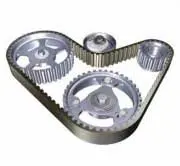
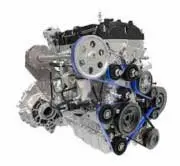
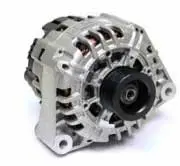
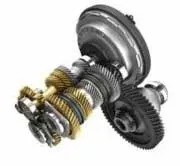
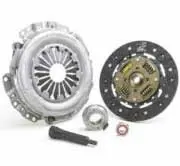
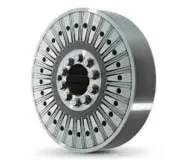
Equipment that can be tested under acyclism (non-exhaustive list)

They use Vega…
PSA, SKF, Valeo, Hutchinson, the Arts & Métiers engineering school... already use Vega for characterisation tests.
Since June 2015, the United States has made acyclism testing mandatory for drive belts (SAE J2432 standard of 23 June 2015).





For any enquiry about our prices and services, contact our team of experts
Our network of experts works in several fields: instrumentation, IT, electronics, vibration analysis...


